
Musée de l'Art Culinaire Marocain review: our verdict
The visit begins with mint tea prepared in front of you and a few lightly sweetened pastries, setting the tone: here, Moroccan cuisine is told as much as it is tasted. The 19th-century riad unfolds spices, utensils, tea rituals, and regional recipes, then moves to the stoves with a hands-on session to prepare zaalouk, tomato and pepper salad, chicken tajine with candied lemon and olives, and, on some days, a milk pastilla with orange blossom.
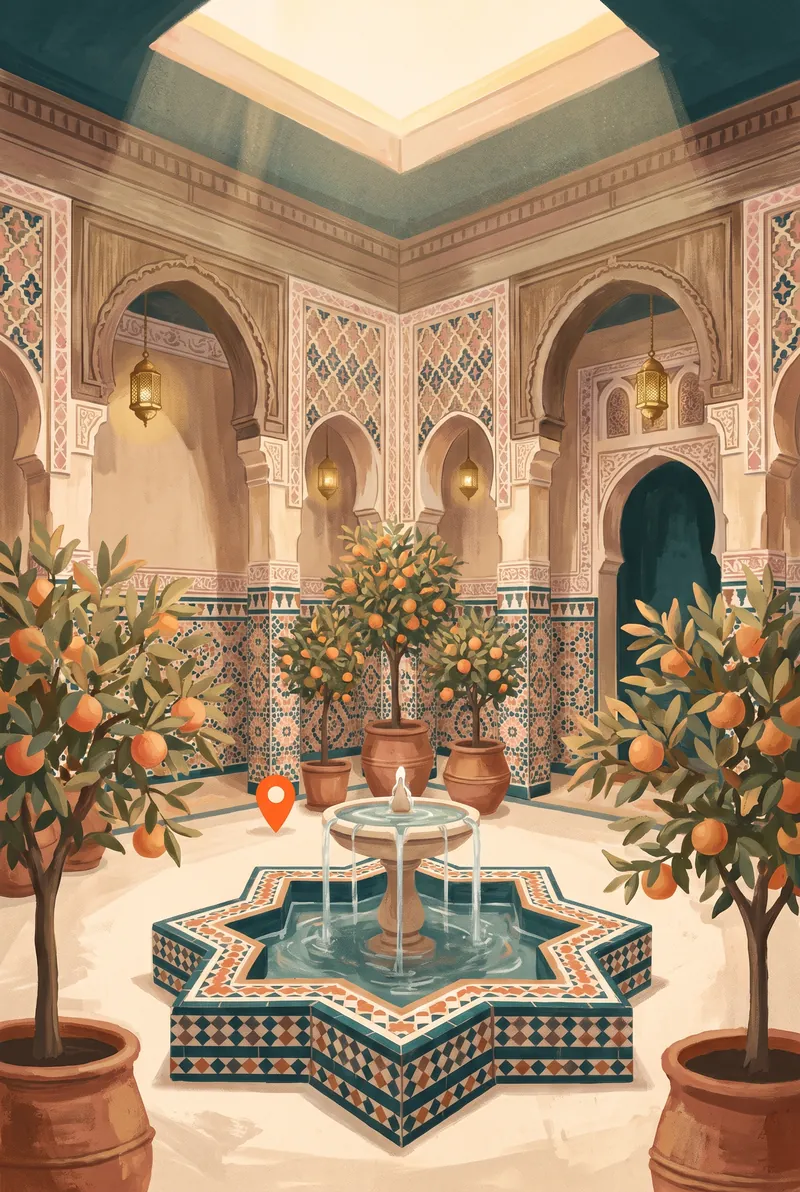
Everything is then enjoyed in the shaded courtyard, and you leave with the recipes, a diploma, and a mini-tajine. The outing suits families, couples, or friends, and the restaurant also allows for a quiet lunch without following the course, just a few steps from the Bahia Palace. Not so much for those hoping for a real lesson, with the history of the dishes and the reasons behind the gestures: preparation wraps up in about an hour, and explanations fly by.
The best time slot: morning or early afternoon; by 4 p.m., the welcome tea has been shortened to move into the kitchen. The smart move: follow up with the Bahia Palace, just a few steps away. Open every day from 9 a.m. to 6 p.m., workshops by reservation, and a shop selling local products before heading out.